The blood glucose monitoring (BGM) systems manufactured by PHC Corporation and sold by Ascensia are currently used by approximately 10 million people with diabetes in over 90 countries. PHC Corporation’s Matsuyama factory, located in Toon City, Ehime, Japan, develops and manufactures blood glucose sensors, the cornerstone of these BGM systems. What gives this factory its strong competitive edge? How has the site been able to reliably and continuously deliver high-quality, high-precision products for people with diabetes? Behind this success are insights from the manufacturing floor, which cannot be reduced to a single technology or data set, along with a culture of relentless improvement that refines these insights into reproducible technical capabilities, and an uncompromising commitment to quality. In this special feature, we take a behind-the-scenes look at the Matsuyama factory, which contributes to PHC Group’s competitiveness and value creation while sharing technical expertise and operational capabilities in blood glucose sensors to the next generation.
History of Products Developed and Manufactured at Matsuyama Factory
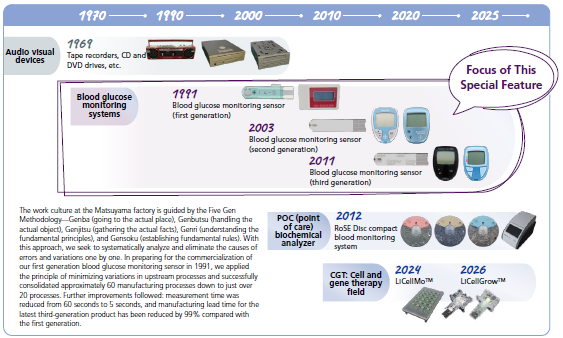
The work culture at the Matsuyama factory is guided by the Five Gen Methodology—Genba (going to the actual place), Genbutsu (handling the actual object), Genjitsu (gathering the actual facts), Genri (understanding the fundamental principles), and Gensoku (establishing fundamental rules). With this approach, we seek to systematically analyze and eliminate the causes of errors and variations one by one. In preparing for the commercialization of our first generation blood glucose monitoring sensor in 1991, we applied the principle of minimizing variations in upstream processes and successfully consolidated approximately 60 manufacturing processes down to just over 20 processes. Further improvements followed: measurement time was reduced from 60 seconds to 5 seconds, and manufacturing lead time for the latest third-generation product has been reduced by 99% compared with the first generation.
1.The Foundations of Our Competitiveness:
A Customer-Centric Approach and an Uncompromising Commitment to Quality
Although PHC Group’s blood glucose sensor business was not the first to the market, it has achieved global success and currently ranks third in terms of global market share. The factors that drove this success included a strong sense of unity within the organization, a keen awareness of the challenges ahead, and an uncompromising commitment to quality based on a customer-centric approach. In the late 1980s, the Matsuyama Division—at that time part of our predecessor Matsushita Kotobuki Electronics Co.—found itself in a state of stagnation in its existing businesses. However, this situation gave rise to a strong determination to launch a new business. Furthermore, guided by the Matsushita Group’s traditional spirit of employee entrepreneurship*1, departments such as development, manufacturing, and quality assurance began collaborating across departmental boundaries. This was bolstered by swift decision-making from top management, enabling the team to transform technology that other companies had considered difficult to commercialize into a successful product. It was this sense of urgency and unity across departments that enabled our remarkable turnaround as a relative latecomer to the BGM market.
The starting point for our development was the pursuit of a product that people with diabetes could use on a daily basis. Initially, high manufacturing costs posed a challenge; however, by conducting a thorough analysis of on-site processes and minimizing upstream variations, we reduced the number of production steps by two-thirds. This operational efficiency enabled us to overcome the previously high cost barrier and provide a product that minimized the financial burden on patients.
Furthermore, we prioritized patient safety over competition for product features. While user convenience, including sensor measurement time, was a key consideration, we focused first on eliminating the risk of life-threatening “false highs”*2 in blood glucose readings. To this end, we collaborated with a supplier to develop an enzyme that was not in use in any other product on the market at the time, incorporating it into the sensors to produce a more sensitive next-generation sensor capable of avoiding false highs. This uncompromising commitment to safety became our foundation as a healthcare company.
This commitment is reflected in our Zero Defect philosophy, an approach that shifts the focus from detecting product defects or faulty items through post-production inspection to preventing the production of faulty items in the first place. We have rigorously enforced quality assurance at the single sensor level and resolved potential issues based on the Five Gen Methodology. Furthermore, as variations in patient usage patterns can affect measurement results, we have conducted user studies in the U.S. and elsewhere and turned the findings into reproducible technology that provides accurate measurements regardless of who uses the device or where it is used. This dedication to protecting lives, combined with hands-on field observation and rigorous data management, enables us to live by the Zero Defect philosophy.
- *1Viewing employees as independent professionals in their own right, taking responsibility for and taking pride in their work to create value, rather than merely relying on the company. Source: Konosuke Matsushita, Shain Kagyo (The Employee Business Strategy), PHP Institute.
- *2A phenomenon whereby, although the actual blood glucose level is normal, test results appear abnormally high due to factors such as errors in the diagnostic equipment or interference from medication. Inappropriate treatment (such as an excessive dose of insulin) based on these incorrect results could lead to serious, life-threatening complications.
2.The Ultimate Competitive Advantage:
Our Vertically Integrated Model
A core strength of the Matsuyama factory lies in its vertically integrated manufacturing process, which covers the entire production chain—from the collaborative development, selection, procurement, and processing of materials with manufacturers through the application and drying of reagents, lamination, cutting, inspection, and packaging. We can explain the benefits of this vertically integrated model by breaking it down into three interconnected strengths.
Strength 1: The “End-to-End” System and the Role of the Process Technology Department
The Matsuyama factory’s “end-to-end” system enables PHC Corporation to handle every step in the production process in-house, from the development and procurement of materials to packaging. We are able to centrally manage changes in material conditions and process parameters, which can be difficult to monitor when outsourcing, and identify and control upstream factors that may affect quality.
Furthermore, at the heart of the system is the Process Technology Department, which acts as a bridge between research and development and the mass production process. By working closely with the development, manufacturing, and quality control departments to ensure that performance achieved during the research phase is consistently reproduced, the Process Technology Department supports the continuous and stable production of high-precision blood glucose sensors.
Strength 2: A Black Box Strategy That Protects Competitive Advantage
At the Matsuyama factory, we have adopted a “black box” strategy, which involves strategically distinguishing between technologies disclosed as patents and know-how kept confidential within our manufacturing process. By deliberately keeping confidential those process conditions that are difficult to identify from the finished product, we protect the unique value of our offerings. This strategy enables PHC Corporation to maintain a technological edge over competitors in the blood glucose sensor business. Furthermore, this approach enables the factory to explore expanding its reach into other product lines, supporting potential future growth for PHC Group.
Strength 3: High-Precision Manufacturing at an Affordable Price
We provide essential, high-precision diabetes technology at a price that helps maintain affordability for people with diabetes. This dual objective of quality and accessibility is the driver of our vertically integrated manufacturing process at the Matsuyama factory. While we previously purchased product parts from external suppliers, the cost of a part purchased from an external supplier dictated the price of the finished product. By purchasing raw materials and manufacturing all parts in-house, we are instead able to retain the value that we would otherwise have paid to external suppliers, helping us keep costs down.
This vertically integrated system, which keeps outsourcing costs to a minimum, ensures quality control, limits variation and waste, and enables us to simultaneously achieve stable quality and price competitiveness. This is the foundation of profitability for the Matsuyama factory.
At the Matsuyama factory, highly accurate blood glucose sensors are consistently manufactured at scale through meticulous control of process conditions across every stage of production, from material surface treatment and reagent coating and drying to lamination, cutting, inspection, and packaging. The process technologies developed through blood glucose sensor production are now being applied to products for point-of-care (POC) chemistry analyzers and the cell and gene therapy field and have become a core source of the Matsuyama factory's competitive advantage.
3.Four Examples of Precision Technology
Our Commitment to Materials Development
In materials development, which forms the upstream stage of manufacturing, the development and selection of enzymes that react with glucose in the blood are crucial to achieving high measurement accuracy. During the development of blood glucose sensors in the early 2000s, the market was in the midst of a race to reduce the amount of time required to measure a sample. However, it became apparent that the enzyme used at the time could react with maltose present in certain infusion solutions, resulting in falsely elevated blood glucose readings. Serious incidents involving other manufacturer's product, which endangered patients' lives, were reported in the market, and the U.S. FDA and other regulatory authorities warned of the associated risk. To resolve this issue, driven by our absolute commitment to safety, we collaborated with an enzyme manufacturer to develop a blood glucose sensor incorporating an enzyme that was not used in any other products on the market at the time. This enabled us to produce a next-generation sensor with further refinements, including shorter measurement times. This commitment to protecting patients' lives became a defining expression of our Integrity value as a global healthcare organization.
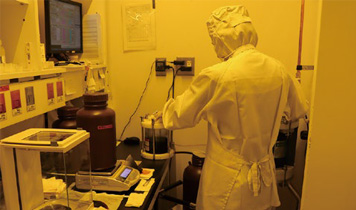
Roll-to-Roll Technology for Minimizing Minute Variations
Blood glucose sensors are manufactured by laminating and processing electrodes, reagents, and cover materials onto a film substrate. At the Matsuyama factory, we utilize Roll-to-Roll technology, which involves conveying this film material in roll form and carrying out the application and drying of reagents, lamination, and cutting in a continuous process. The characteristics of distortion and warping in film material vary depending on whether it is at the beginning or end of a roll, or at the center or edge. In the manufacture of high-precision medical sensors, these subtle differences affect how the reagents spread, their crystalline state after drying, and their solubility when blood is introduced, all of which have a direct impact on measurement accuracy.
To ensure consistency, at the Matsuyama factory we use high-speed cameras, evaluation tests, and simulations to visualize and analyze these differences, optimizing temperature, humidity, airflow, and the condition of the material surface. By ensuring uniformity in the spread of reagents, the crystalline state after drying, and solubility upon contact with blood, we maintain stable measurement accuracy during mass production. This precise continuous processing technology enables the Matsuyama factory to mass-produce consistently high-precision blood glucose sensors.
Achieving Zero Laminating Defects Through Predictive Management
In the manufacture of blood glucose sensors, there is a process involving the lamination of cover materials onto a film-like substrate. This is a critical process in which heat and pressure are applied using rollers to form a structure that ensures the electrodes and reagents are functioning correctly, while preserving the microscopic channels through which blood flows. In this process, lamination defects caused by roller deterioration were a known problem. Critically, by the time a fault could be detected and the process shut down, defective products would have already been produced, all of which would have to be disposed of.
At the Matsuyama factory, we therefore shifted our approach from “responding after a problem has occurred” to “predictive management” aimed at detecting early warning signs of potential faults. First, after consulting external experts, we built test equipment capable of reproducing faults and used it to repeatedly verify effective parameters for early-warning detection. Furthermore, through collaborative research with universities and a process of trial and error, we trained the system using vast amounts of data from both normal and abnormal conditions, establishing a mechanism that reliably detects deviations from the norm.
After several years of careful work, we are now able to detect in advance the occurrence of defective sensors caused by roller deterioration, and we have completely eliminated this cause of faulty sensors.
Dramatic Reduction in Processing Time Achieved Through Painstaking Experimentation
In the manufacture of blood glucose sensors, a minute amount of reagent is applied to the sensor surface for blood glucose measurement and then allowed to dry. The rate at which the reagent dissolves in blood varies depending on the degree of dryness, which has a significant impact on measurement accuracy. It was previously thought that maintaining a constant temperature, humidity, and air velocity while allowing the sensor to dry slowly would create a homogenous crystalline state and ensure accuracy. However, this drying process was also a production bottleneck. While the sensors move through the rest of the production line at high speed, the drying process takes considerable time. How could this process be shortened while maintaining or improving quality? This was a challenge in enhancing productivity.
We therefore set about visualizing and quantifying the drying conditions. We altered various conditions—such as temperature, humidity, air velocity, and drying time—one by one, using high-speed cameras to film and analyze how the reagent changed, and identified the optimal conditions. As a result, we discovered that the conditions at the precise moment the reagent solidifies are the crucial factor for achieving the optimal state. This meant there was no need to dry a batch slowly from start to finish; instead, we could rapidly remove moisture in the first half of the process and then uniformly and slowly dry during the period when the reagent solidifies. This method enabled us to significantly shorten the drying time compared to conventional methods. By freeing ourselves from existing practices and diligently pursuing the optimal method—even if it took more time to discover—we were able to significantly improve productivity and achieve substantial cost reductions.
4.Creating Precision Technology: Behind the Scenes
Vertically Integrated Model: Achieving Both High Quality and Low Costs Through Manufacturing Excellence
The blood glucose sensor business began in a challenging environment. However, faced with the goal of reducing manufacturing costs while maintaining quality, we placed our hopes in a technology that other companies had given up on. At that time, Matsushita Kotobuki Electronics Co., a company within the Matsushita Group specializing in manufacturing, was responsible for businesses serving the North American market, among others. Since its foundation, the company had prided itself on its development, manufacturing, and production technology capabilities, and had been committed to creating products that were one-of-a-kind or market-leading.
While the company had confidence in its manufacturing excellence, it was the establishment of the vertically integrated model that transformed this conviction into a technical breakthrough. The decision to start making parts that were typically sourced externally was a difficult one. However, this eliminated quality risks associated with dependence on external suppliers and enabled us to control the entire process ourselves. As a result, we were able to achieve both significantly lower costs and consistently high quality. We believe that the true reason the Matsuyama factory has maintained its competitiveness for over 30 years lies in our continued commitment to using concrete technological choices and organizational actions to protect patient health.
Development
Hiroyuki Tokunaga
Director, PHC Corporation
The technologies we have cultivated through more than 30 years of blood glucose sensor development are now being applied to cutting-edge areas of the life sciences, such as in the live cell metabolic analyzer LiCellMo™ for the cell and gene therapy field, creating new value.
Process Technology: Bridging the Gap Between the Laboratory and the Manufacturing Floor
“Process Technology” is a department name that is probably not familiar to most people. Its role is to bridge the gap between development—such as experimentation and design—and manufacturing. When data obtained in the laboratory cannot be reproduced on the manufacturing floor, the department investigates the cause. Its members must meticulously investigate factors that are not readily apparent—such as drying conditions, material handling, temperature, humidity, and equipment behavior—while gaining an understanding of chemical reactions and material properties. The members ultimately translate these findings into optimal conditions for our equipment and processes. This involves a continuous series of painstaking tasks: evaluating, collecting data, and investigating causes time and time again. However, without this cumulative effort, it would be impossible to mass-produce our blood glucose sensors.
We are also fortunate to have an organizational culture characterized by close collaboration with other departments—such as design, production technology, manufacturing, and quality assurance—and minimal silo mentality. While respecting each other’s roles, we engage in lively and spirited debate, working together to refine laboratory technologies to achieve the quality required for mass production, all united by the goal of continuous improvement. We believe this sense of unity is the driving force behind the Matsuyama factory’s success.
Process Technology

Koji Takahashi
Head of the Manufacturing Promotion
Management Department,
Common Functional Division,
Life Sciences Business Unit,
Matsuyama District,
PHC Corporation
Bringing Design Concepts to Life and Ensuring Stable Operation 24/7
The Production Technology Department is responsible for reliably translating the vision of design and development engineers into reality on the manufacturing floor, combining detailed supporting data generated by process technology, and a commitment to quality control, and the on-site expertise of manufacturing leaders. To ensure the continuous production of products with consistent quality 24/7, the department is responsible for a wide range of activities, from the development of necessary manufacturing techniques to the conceptual design, installation, and establishment of production equipment, as well as the maintenance and improvement of equipment and related parts.
We have not only sought to further stabilize quality but have also taken on the challenge of establishing construction methods, equipment, and mass production processes to reduce costs and realize a vertically integrated model. Throughout this process, we have worked in close collaboration with relevant departments—including design, process technology, manufacturing, and quality control—and have gone beyond theoretical analysis to conduct on-site verification and implement continuous improvements. We believe in taking on challenges while adapting flexibly to changing conditions and new requirements, building safer and more efficient production systems, and continuing to evolve.
Production Technology

Eiji Ninomiya
Factory Manager (Former Head of Production Technology),
Shikoku Factory
(Wakimachi Factory),
Biomedical Business Group,
Life Sciences Business Unit,
Wakimachi District,
PHC Corporation
Aiming for Quality That Builds Trust
PHC Group is committed to improving quality on a daily basis to ensure that our customers can use our products with complete peace of mind.
The Quality Control Department plays a wide-ranging role, extending beyond simply verifying product quality to include parts management, manufacturing process management, quality-building at the design stage, and the identification of quality-related information in the market. Furthermore, it acts as the point of contact for sales companies and business partners, receiving feedback and quality-related information from customers and collaborating with related departments to drive improvement initiatives.
Quality cannot be maintained through a single initiative. Better quality is fostered by continually building on day-to-day observations and shared information.
For this reason, our group holds daily Quality Approval Meetings attended by members from the manufacturing, production technology, quality control, and technical departments. We share information that could potentially affect quality, such as changes to materials or the condition of equipment, and confirm any points requiring attention in advance.
Quality Control

Toshiharu Yoshioka
Head of the Quality Assurance
Department, Diabetes Group,
Matsuyama District,
PHC Corporation
By focusing each day on how to prevent problems rather than responding after they occur, we are able to maintain consistent quality.
We will continue to prioritize quality in our manufacturing processes so that we can keep delivering products and services that earn the trust of our customers, business partners, and all other stakeholders.
5.From Matsuyama to the Rest of Japan and the World: Precision Technology Passed Down Through the Generations
Technology Transfer Based on Mutual Cultural Respect
The manufacturing expertise cultivated at the Matsuyama factory has already been rolled out to other production sites. For example, at PHC Corporation’s Gunma factory in Japan, the process improvement approach developed in Matsuyama is being utilized to enhance productivity and promote quality control activities. At sites outside Japan, workers who have gained experience in Matsuyama are involved in spreading this manufacturing approach. Furthermore, we began production of blood glucose sensors in Algeria in fiscal year 2025. Technology transfer does not succeed if it is led solely by the originating party. We approach technology transfer with the understanding that the receiving site has unique strengths, and through ongoing dialogue and mutual accommodation, we encourage self-driven improvement. In this way, we are spreading manufacturing best practices from Matsuyama to the world.
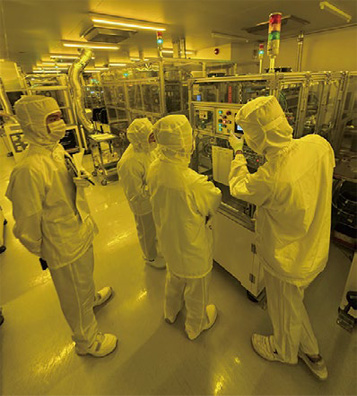 A tour of the Matsuyama factory
for members of PHC Group offices outside Japan
Preserving Craftsmanship and Sharing Skills With the Next Generation
Talent development is crucial to sustaining manufacturing in the future. One challenge our company is facing is how to pass on the know-how of our skilled technicians, who have supported manufacturing for many years, to the next generation of workers within a short timeframe. Highly technical skills cannot be learned simply through the traditional craftsman-style approach of watching senior colleagues at work. We are thoroughly committed to documenting our unique and specific know-how and making it accessible to new workers.
We are making continuous efforts to preserve the techniques and principles accumulated over the years in a tangible form, such as by creating panels detailing past challenges, successes, and examples of improvements, which are then displayed throughout the factory.
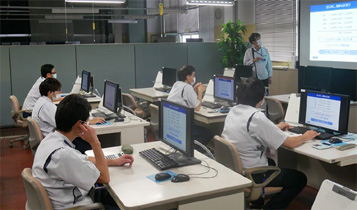 Training session led by an experienced engineer
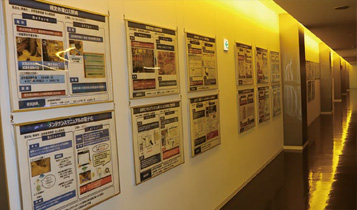 Panels detailing past challenges, successes,
and examples of improvements displayed in the factory corridors
6.Message for the Future
Evolving as a Core Business and Breaking New Ground
We have manufactured world-class blood glucose sensor. Going forward, to further strengthen this core business for PHC Group, we will pursue extensive streamlining measures, including optimizing our entire supply chain and bringing packaging processes in-house. As part of these efforts to manage all processes, the Matsuyama team has conducted on-site verifications and applied the same manufacturing excellence and process design expertise cultivated in production of blood glucose sensors. We intend to enhance the profitability of the entire business by making persistent and diligent improvements.
Looking ahead, we will assess the potential for new products related to diabetes management. If we can develop products that go beyond blood glucose monitoring to contribute in other ways to the lives of people with chronic health issues, we can expect further growth for the business. In recognition of our intent to expand our business beyond blood glucose monitoring, in fiscal year 2026 we changed the name of the BGM Business Unit to the Diabetes Management Business Unit. Our company possesses a history, technology, and capabilities developed by our predecessors, and it is our responsibility to inherit and develop them further. While contributing to PHC Group as a core business, we intend to continue taking on new challenges and creating further opportunities for growth.
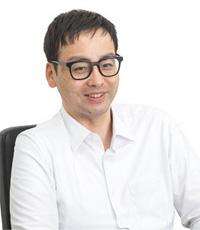
Yoshihiro Ito
Group Leader,
Diabetes Group,
Matsuyama District,
PHC Corporation
Carrying on Our End-to-End Manufacturing Excellence and Shaping the Future Through Company-Wide Participation
The manufacturing excellence cultivated at the Matsuyama factory forms the foundation of our blood glucose sensor business. At the same time, it serves as an asset for the future of PHC Group. End-to-end manufacturing through vertical integration, process design expertise, production technology, quality control, improvement initiatives, proprietary know-how, and the experience of our workforce—all these elements work in concert to build our strengths. Simply preserving past technologies does not in itself create value. It is vital that we pass them on, improve them, and adapt them as necessary to drive our future growth. When it comes to site operations, safety takes absolute priority. Safety is non-negotiable. We ensure that new employees are made fully aware of the importance of safety from the very outset. If a risk is identified, it must not be ignored; employees are required to raise the alarm and take action. Furthermore, we must value our people. Our best work is not done alone, but as a team. We emphasize the importance of respecting others and valuing our team members.
Going forward, we will seek to further extend the manufacturing excellence of the Matsuyama factory to our other global sites. Rather than simply transferring equipment and methods, we intend to spread our approach to improvement, our commitment to quality, and our staff development systems across PHC Group, ensuring the continuous evolution of our manufacturing excellence.

Atsushi Irie
Factory Manager,
Diabetes Factory
(Matsuyama Factory),
Diabetes Group,
Matsuyama District,
PHC Corporation